Globalno: Tveganje za žičnate črve na krompirju doseže vrhunec v prvih dveh letih po travinju
Ključni odvzemi
- 2 years after ploughing grassland is the highest-risk time
- 60,000 wireworms/ha can be shown by one larva in 20 cores
- 30 soil samples are needed for a 4 ha field in UC guidance
- 10°C soil at 10-15 cm depth is required for bait trapping
Zakaj je pomembno
- Za kmete
- Sample soil or set bait traps before planting potatoes on land that was grass within 2 years; if thresholds are met, choose another field.
- Za procesorje
- Ask growers for wireworm risk data on fields after grassland and plan early intake from high-risk fields.
- Za dobavitelje
- Offer soil sampling and bait trap services timed for 7-10°C soil temperatures in spring.
60-sekundni povzetek
Wireworm control in potatoes is mostly about choosing the right field and measuring before planting. British and Californian extension advice agrees that fields ploughed out of grass or pasture within the last two years are the riskiest, because larvae survive and feed in the soil for three to five years. Detection thresholds are strikingly low: finding just one larva in twenty 10 cm soil cores points to roughly 60,000 per hectare. The Californian programme ties sampling effort to field size, for example 30 samples and a threshold of one larva for about 4 ha, and warns that baits only work once the soil reaches about 10°C. With few soil insecticides left, growers, agronomists and buyers of washed potatoes should treat early harvest and field rotation as the main defence. Caveat: species and life cycles differ between regions, so local thresholds may vary.
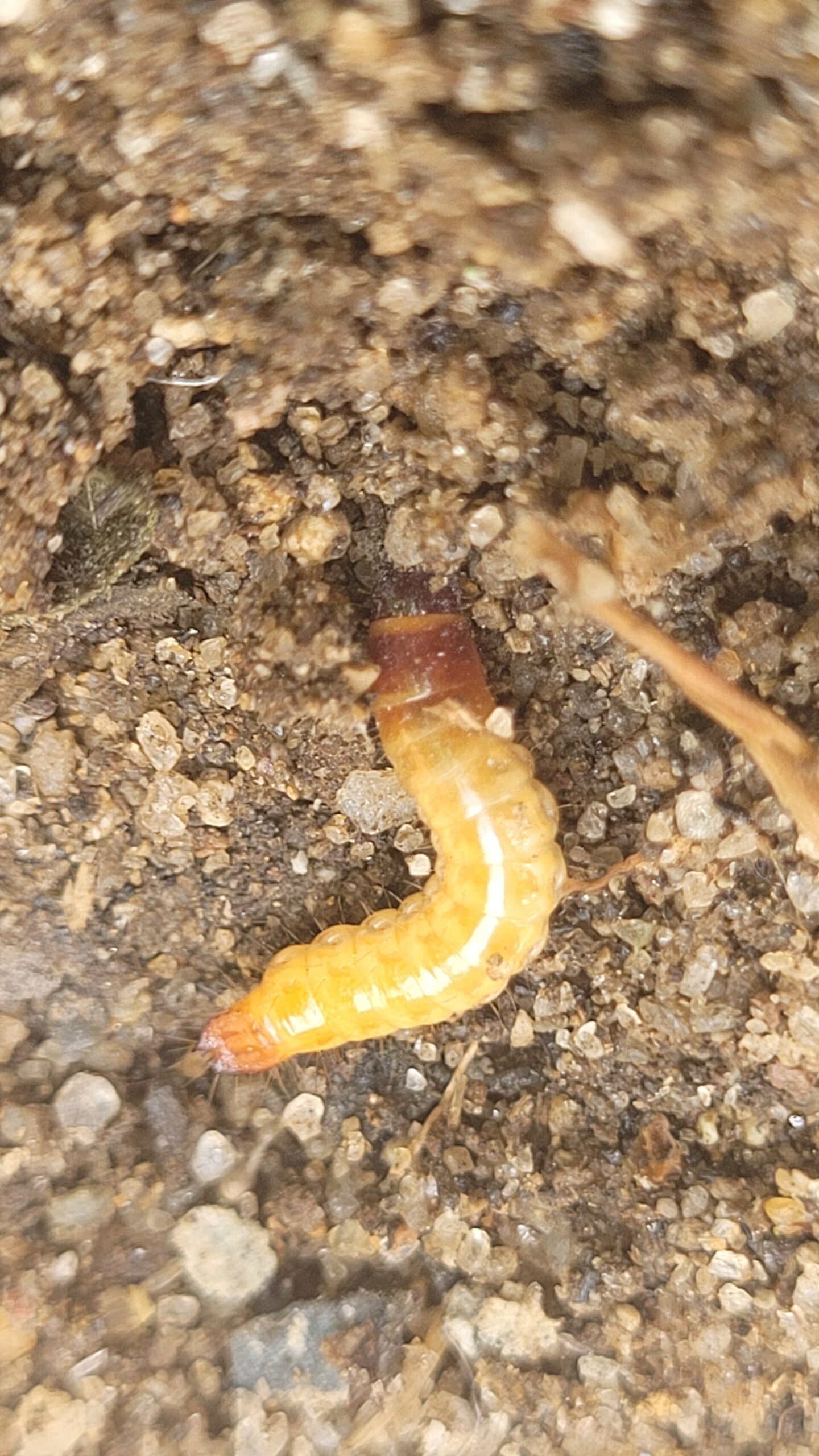
Wireworms are the larvae of click beetles. They bore small round holes into tubers and make them unsaleable. Two extension services, AHDB in the UK and the University of California IPM programme, publish practical guidance with clear numbers.
A long life in the soil
The larvae live for years. According to AHDB, they feed for 4–5 years. UC IPM says common species need 3–4 years to complete their life cycle. This long cycle explains why grassland builds up populations.
The risk is highest right after grass. AHDB says crops sown within 2 years of ploughing out permanent pasture are at highest risk. UC IPM advises avoiding potatoes immediately after clover, grass, pasture or weedy alfalfa.
Med tednom. Odjavite se z enim klikom.
How to measure the risk
Low numbers can already cause damage. AHDB states that a single wireworm in 20 soil cores of 10 cm diameter can represent a significant risk. That equals about 60,000 wireworms per hectare.
UC IPM links sample numbers to field size. It uses these thresholds:
- 10 acres (about 4 ha): 30 samples, threshold 1 wireworm.
- 40 acres (about 16 ha): 60 samples, threshold 2 wireworms.
- 160 acres (about 65 ha): 120 samples, threshold 5 wireworms.
Timing matters. Bait traps work when soil at 10–15 cm depth reaches about 10°C (50°F). Soil sampling should be done in spring when soil at 15 cm is 7°C (45°F) or warmer. In late summer, samples are taken at 45 cm depth, UC IPM says.
What control options exist
Chemical options are limited. UC IPM notes that the soil must be at least 10°C when ethoprop is applied. Wireworms bore up to about 1.3 cm into the tuber, but do not tunnel all the way through.
Cultural control is central. AHDB advises avoiding infested fields and considering an early harvest when damage is expected.
Zakaj je pomembno
Wireworm damage is mainly a quality problem. Holed tubers can lead to rejected loads for fresh markets or processing. Both sources point to prevention through field choice and monitoring as the main tool.
Growers should sample before planting potatoes after grass. If numbers exceed thresholds, choosing another field or harvesting early usually costs less than rejected loads.
Preprečevanje in nadzor · Uvodnik
Wireworms (Agriotes spp.): what growers can do
- preprečevanje: avoid potatoes in the first two years after grassland, cultivate the soil in late summer and lift the crop as soon as it is mature.
- Spremljanje: use bait traps or soil samples before planting to estimate the risk.
- Kemična zaščita: imidacloprid (IRAC 4A) and fipronil (IRAC 2B) are used as tuber or furrow treatments in some countries — check the national register of your country. They are not approved in the EU and the UK.
- Upravljanje odpornosti: do not use the same IRAC group on seed tubers and on the crop in one season.
To obvestilo je pripravila uredniška ekipa potatoes.news zgolj v informativne namene. Ne gre za priporočilo nobenega podjetja in ni obvezno. Uporabljajte samo fitofarmacevtska sredstva, ki so odobrena v vaši državi, in upoštevajte navodila na etiketi. Imena in registracije izdelkov se med državami razlikujejo; posvetujte se z lokalnim agronomom.
Photo: Click beetle larvae (wireworms) (illustrative). ZATRIPPIT / Wikimedia Commons, javna domena
Globalni povzetek o krompirju
Pet najpomembnejših novic, cene, opozorila o boleznih in dogodki. Med tednom zjutraj, brez oglaševanja.
Viri
- AHDB — Identification and management of wireworms in field crops — https://ahdb.org.uk/knowledge-library/identification-and-management-of-wireworms-in-field-crops
- UC IPM — Wireworms / Potato — https://ipm.ucanr.edu/agriculture/potato/wireworms/
Povezano v tem gradivu
- Država
- Svetovna
- Tehnologije
- bait traps; soil coring; ethoprop
- oddelki
- NoviceZaščita rastlin
Podobni zgodbe
Nizozemska: Pridelovalec semen iz Frieslanda ohranja Annabelle čisto že pet generacij brez minigomoljev
Svetovne cene krompirja, 39. teden: Evropa se utrjuje s kratko letino, saj je Azija še vedno preobremenjena